Thoise & Kargil Airports Move Closer to Civilian Flights: Ladakh’s Air Connectivity Enters a New Phase
By: News Desk | 22 Aug 2026
Ladakh air connectivity | Thoise Airport civilian flights | Kargil Airport civilian flights | Nubra Valley flights | Ladakh tourism
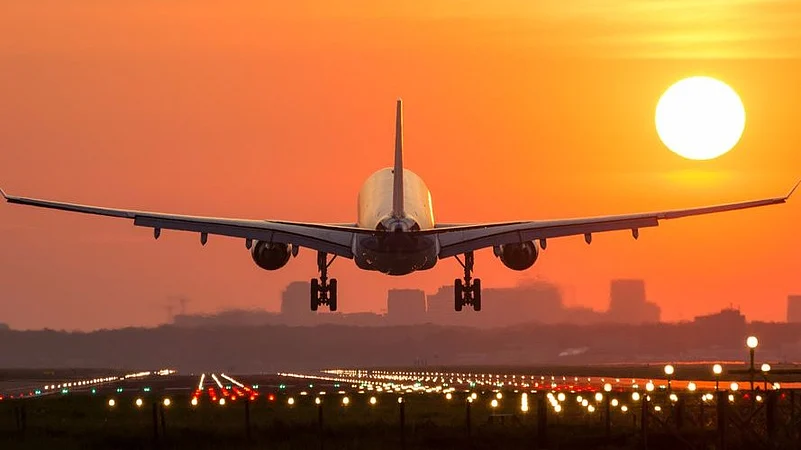
Ladakh’s remote border regions could soon become significantly easier to reach by air.
Plans to introduce civilian flight operations from Thoise Airport in Nubra Valley and Kargil Airport have moved forward following a high-level review involving the Ladakh administration, Ministry of Defence, Indian Air Force (IAF), Airports Authority of India (AAI) and other agencies.
But there is an important qualification to the headline: commercial flights have not started yet. The authorities are working towards operationalisation, with Thoise currently targeting civilian operations by December 2026, while Kargil is scheduled for a joint readiness assessment on September 1.
That distinction matters because both airfields have strategic and operational constraints that make opening them to regular commercial aviation considerably more complicated than simply adding another airport to an airline timetable.
If the plan succeeds, however, the economic consequences could extend well beyond aviation.
For Nubra, Kargil and other border destinations, it could mean a shorter journey, greater tourism potential, better access for residents and a new logistics lifeline.
Thoise and Kargil: Two Airports, One Connectivity Challenge
At present, Leh’s Kushok Bakula Rimpochee Airport remains Ladakh’s principal civilian aviation gateway.
Thoise and Kargil have historically had important defence roles, with both airfields associated with the Indian Air Force and strategic operations.
The idea of using them for civilian connectivity is not new.
Government records show that both Kargil and Thoise were identified under the regional connectivity framework, while earlier proposals had envisaged routes linking Thoise with Srinagar and Chandigarh and Kargil with Srinagar and Jammu.
The difference in 2026 is that the plan appears to be moving from a long-standing proposal towards actual implementation.
A recent meeting chaired by Ladakh Lieutenant Governor Vinai Kumar Saxena brought together the defence establishment, IAF, AAI and Ladakh administration to address infrastructure, regulatory and operational requirements.
Thoise Airport: Nubra Could Get Its Own Civil Air Gateway
The most significant development is at Thoise in Nubra Valley.
The IAF has approved five acres of land for construction of a new civil terminal, according to recent reports.
Meanwhile, runway re-carpeting is underway and is expected to be completed by November. In the interim, authorities plan to refurbish an existing chartered-flight terminal so that civil operations can begin before the permanent terminal is completed.
The current target is December 2026 for the start of civilian operations.
That makes Thoise the more advanced of the two projects.
And the significance goes well beyond convenience.
Nubra is geographically remote
Travelling to Nubra overland from Leh requires crossing the high-altitude Khardung La route and navigating mountainous terrain.
Road travel can be affected by:
- snowfall;
- landslides;
- extreme weather;
- road maintenance;
- seasonal closures;
- and the physical limitations of high-altitude transport.
A functioning civilian air connection would provide another option for residents and visitors.
From Leh to Nubra: A New Tourism Equation
Nubra Valley has increasingly become one of Ladakh’s most sought-after tourism regions.
Its attractions include:
- Diskit;
- Hunder;
- Turtuk;
- the Shyok Valley;
- monasteries;
- sand dunes;
- high-altitude landscapes;
- and access towards the Siachen region.
The proposed aviation link could change how tourists design their Ladakh itineraries.
Instead of treating Nubra solely as a road excursion from Leh, travellers could potentially build Nubra into an independent air-connected destination.
That could be particularly significant for visitors with limited time.
A tourist arriving in Leh could eventually fly onward to Nubra, spend several days exploring the valley and continue by road towards other destinations.
For local tourism operators, that creates opportunities for:
- hotels and guesthouses;
- taxis;
- tour operators;
- restaurants;
- guides;
- adventure activities;
- handicraft sellers;
- homestays;
- and local transport providers.
In other words, an airport is not merely an aviation project. It can become an economic multiplier.
A New Opportunity for Ladakh Tour Operators
The potential change is especially interesting for travellers planning multi-destination Ladakh holidays.
Instead of the conventional Leh–Nubra–Pangong–Leh circuit, future itineraries could be structured around separate air and road gateways.
For visitors who want a professionally arranged Ladakh trip, local travel planners could eventually combine flights, permits, accommodation, transfers and sightseeing into more flexible packages.
For example, a future itinerary could combine Nubra, Turtuk, Pangong and Leh while avoiding some of the backtracking associated with traditional circuits.
That is where experienced destination managers such as JKL Travels and Kashmir Travels could potentially add value—particularly in designing Kashmir-Ladakh combinations, airport transfers and customised itineraries as the new connectivity becomes operational.
Kargil Airport: A Long-Standing Demand
The story at Kargil Airport is somewhat different.
Civil aviation at Kargil has been discussed for years.
Government records dating back more than a decade show plans to expand the airport so that larger transport aircraft could operate there. A 2014 Ministry of Civil Aviation statement noted that the airport had civil facilities but lacked commercially viable airline operations at the time.
More recently, the Ladakh administration has repeatedly raised the issue of restoring or expanding civilian connectivity.
In 2021, officials discussed operating small fixed-wing civilian aircraft to Kargil and using aviation for passenger and horticulture cargo services.
In 2025, the Ladakh administration again highlighted the need to resume civilian flights from Kargil.
Now the process is moving towards a more concrete assessment.
A joint inspection of Kargil Airport is scheduled for September 1, 2026, to examine its readiness for civilian operations.
That means Kargil should not yet be described as having secured regular commercial flights.
The more accurate description is:
Kargil is being assessed for civilian flight operations.
Why Kargil Needs Better Air Connectivity
Kargil occupies a strategically and geographically important position between Srinagar, Leh and the wider western Ladakh region.
The region is separated from major urban centres by difficult terrain and long road journeys.
Winter makes the situation even more complicated.
For residents, air connectivity could improve access to:
- hospitals;
- educational institutions;
- government services;
- employment centres;
- markets;
- and emergency travel.
For businesses, it could improve movement of high-value and time-sensitive goods.
For tourists, it could open the door to a completely different Ladakh itinerary.
Kargil Could Become a Tourism Gateway
Kargil is often treated as a transit point between Srinagar and Leh.
That may change.
With regular civilian flights, the town could increasingly become a destination rather than merely a stopover.
Tourism circuits could incorporate:
Kargil → Drass → Zanskar
or
Kargil → Leh → Nubra
or even longer Kashmir-Ladakh combinations.
The surrounding region offers substantial tourism potential, including Drass, Suru Valley, Zanskar and historic and cultural attractions.
The Ladakh administration itself has highlighted destinations such as Kargil, Drass, Turtuk and Siachen Base Camp while discussing the tourism potential of improved aviation connectivity.
The Winter Factor Could Be the Biggest Advantage
For Ladakh’s remote communities, this is not only about tourists.
It is about reliability.
Nubra already receives winter civilian airlift support. In January 2026, an Indian Air Force aircraft carried around 50 civilian passengers from Thoise to Chandigarh as part of winter connectivity arrangements.
Such services demonstrate the underlying need.
During harsh winter months, road connectivity can become unreliable or severely restricted.
A regular civil aviation system would provide a more predictable alternative—although weather and operational limitations mean that aviation cannot guarantee uninterrupted connectivity either.
That distinction should not be overlooked.
High Altitude Is Aviation’s Biggest Challenge
Opening an airport in Ladakh is fundamentally different from opening one in a low-altitude plain.
The region’s high elevation, mountainous terrain and severe weather create operational challenges.
Airlines must consider:
- aircraft performance at high altitude;
- runway characteristics;
- payload restrictions;
- weather conditions;
- visibility;
- wind;
- emergency procedures;
- navigation;
- fuel planning;
- and crew requirements.
This can influence both aircraft selection and ticket prices.
Therefore, connectivity alone does not guarantee affordable connectivity.
The next challenge will be ensuring that airlines can operate commercially and consistently.
Defence and Civil Aviation Must Share the Same Airspace
There is another unusual dimension.
Both Thoise and Kargil have strategic importance.
Civilian flights cannot simply operate according to the same model used at an ordinary domestic airport.
The civil aviation system must work closely with:
IAF + Ministry of Defence + AAI + DGCA + Ladakh Administration + airlines.
Issues such as:
- flight timings;
- security;
- terminal access;
- passenger screening;
- air traffic coordination;
- restricted areas;
- runway availability;
- emergency procedures;
will require detailed coordination.
Recent discussions specifically focused on resolving infrastructure, regulatory and operational issues, underscoring that several steps remain before commercial aviation can begin.
Infrastructure Is Still the Key Test
The announcement sounds transformative.
But the real test will happen on the ground.
Thoise needs a civil terminal and supporting facilities.
The administration has already moved towards this by securing land and planning terminal development. Runway re-carpeting is also underway.
Kargil, meanwhile, requires a technical assessment to determine what is needed for safe commercial operations.
That could include improvements to:
- passenger terminals;
- security screening;
- apron facilities;
- navigation systems;
- fire and rescue infrastructure;
- baggage handling;
- passenger waiting areas;
- access roads;
- and other airport systems.
The success of the project will therefore depend on how quickly these requirements can be completed without compromising safety.
The Economic Impact Could Extend Beyond Tourism
Tourism will probably be the most visible beneficiary.
But the broader economic impact could be much larger.
Employment
Airports create direct and indirect jobs in:
- ground handling;
- security;
- hospitality;
- transport;
- maintenance;
- food services;
- retail;
- tourism;
- and logistics.
Local businesses
More visitors mean greater demand for:
- hotels;
- restaurants;
- taxis;
- guides;
- handicrafts;
- adventure tourism;
- local products.
Healthcare
Faster air access can become particularly important for patients requiring treatment outside the region.
Education
Students travelling to Jammu, Srinagar, Chandigarh, Delhi or other centres could benefit from quicker connectivity.
Trade
High-value, low-volume goods can sometimes justify air transportation where road transport is slow or unreliable.
What It Means for Kashmir-Ladakh Tourism Circuits
The development could also reshape tourism between Kashmir and Ladakh.
At present, many travellers approach Ladakh through Leh or combine Kashmir and Ladakh primarily through road routes.
Civilian aviation at Kargil could eventually provide a new bridge between the two tourism economies.
A traveller could potentially plan:
Srinagar → Kargil → Leh → Nubra
or build a more customised itinerary around the new air gateways.
For travel companies, this could create a new generation of Kashmir-Ladakh holiday packages, combining flights, road transfers, accommodation and sightseeing rather than relying exclusively on conventional circuits.
For travellers looking for a single-window arrangement, established operators such as JKL Travels and Kashmir Travels can be positioned to develop such packages once schedules and airline routes are formally announced.
A Word of Caution for Travellers
There is considerable excitement surrounding the announcement, but travellers should avoid booking trips based on unconfirmed flight schedules.
As of now:
- Thoise: civilian operations are being targeted for December 2026.
- Kargil: readiness assessment is scheduled before a final operational roadmap.
- Airline schedules: specific regular commercial routes and frequencies still need to be formally announced.
- Infrastructure: work remains ongoing.
The most responsible approach is to wait for official airline and airport schedules before making non-refundable travel arrangements.
From Strategic Airfields to Civilian Gateways
There is also a larger national-security dimension.
Ladakh’s border regions are strategically sensitive, and infrastructure development in such areas serves more than one purpose.
Roads, tunnels, telecommunications networks, airfields and airports can simultaneously support:
- civilian mobility;
- tourism;
- economic development;
- disaster response;
- medical evacuation;
- and strategic logistics.
The government has already emphasised the dual benefits of improved aviation infrastructure in Ladakh. For example, upgrades at Leh’s Air Force Station were described by the Ministry of Defence as improving civil departures while also strengthening the region’s humanitarian assistance and disaster-relief capability.
Thoise and Kargil fit into that broader infrastructure story.
Ladakh’s Aviation Map Could Look Very Different
If the current plans become reality, Ladakh’s aviation geography could gradually evolve from a single major civilian gateway at Leh into a more distributed network.
That could mean:
Leh — central Ladakh gateway
Thoise — Nubra and northern border-region gateway
Kargil — western Ladakh gateway
Such a structure could make the region more resilient.
It could also reduce the pressure placed on Leh, particularly during peak tourist seasons.
The Union government’s Modified UDAN programme, approved in March 2026 with a ₹28,840-crore outlay, explicitly aims to expand regional connectivity and develop 100 airports from existing unserved airstrips, while supporting remote and hilly regions.
That policy environment could potentially support Ladakh’s wider aviation ambitions.
The Bigger Picture: Connectivity Can Change the Economy of a Border Region
The real significance of Thoise and Kargil is not simply that passengers may be able to board aircraft closer to their homes.
It is that distance itself can become less economically restrictive.
A remote village connected to a functioning airport is not suddenly transformed into a city.
But it becomes easier for:
- tourists to arrive;
- businesses to operate;
- students to travel;
- patients to seek treatment;
- products to reach markets;
- and local entrepreneurs to connect with the outside economy.
That is why aviation infrastructure can have an outsized impact in mountainous regions.
What Happens Next?
The next few months will be crucial.
For Thoise
The immediate priorities are runway work, terminal arrangements and the infrastructure required for civil operations. The current target is December 2026.
For Kargil
The September 1 joint inspection should provide a clearer picture of the infrastructure and technical requirements before commercial operations can be finalised.
For Airlines
The critical question will be commercial viability.
An airport can be technically ready but still struggle if passenger numbers and operating economics do not support regular flights.
For Ladakh
The challenge will be ensuring that connectivity produces sustainable local economic benefits, rather than simply bringing more tourists into the region without strengthening local infrastructure and communities.
Final Analysis: A Flight Path Towards a More Connected Ladakh
The proposed civilian operations at Thoise and Kargil airports represent a potentially transformative development for Ladakh, but the story is still at the implementation stage.
The most significant near-term development is at Thoise, where a five-acre site has been approved for a new civil terminal, runway re-carpeting is underway and civilian operations are being targeted for December. Kargil is slightly further behind, with a joint inspection planned to determine its readiness.
So this is not yet a story about two new airports suddenly opening their gates to commercial passengers.
It is a story about Ladakh moving closer to a new aviation era.
If the plans are completed successfully, Thoise could give Nubra Valley a direct civilian aviation gateway, while Kargil could finally secure the reliable air connectivity residents and businesses have sought for years.
The benefits could reach far beyond tourism.
For a region where geography, altitude and winter routinely turn distance into a serious economic and social barrier, better air connectivity is not simply about saving travel time—it is about opening access to opportunity.
And for Ladakh’s tourism economy, the next chapter may not be about getting more people to Leh.
It may be about giving travellers more ways to enter, explore and experience Ladakh.